
Work & AI
On Sunday mornings, while having a coffee☕, I remember that some years ago I used to catch up on the news of the week with the…
On Sunday mornings, while having a coffee☕, I remember that some years ago I used to catch up on the news of the week with the newspaper El Comercio🗞️, with a big tabloid presentation that I bought with a subscription and it arrived in a bag so you wouldn’t stain your hands with the ink.
Today things have changed a lot, I basically no longer read printed newspapers, everything in digital 📱, in the case of books is different, I prefer to combine between digital and printed, in this area I still find a certain pleasure to read the paper and turn page after page and search and reread, the smell, etc..
Today, as usual, I was reading The Economist, which is well worth the investment of a subscription, and I came across an article that I would like to briefly comment on three points that caught my attention: “Your job is (probably) safe from artificial intelligence” (the link to the article I share with you is at the bottom of the post).
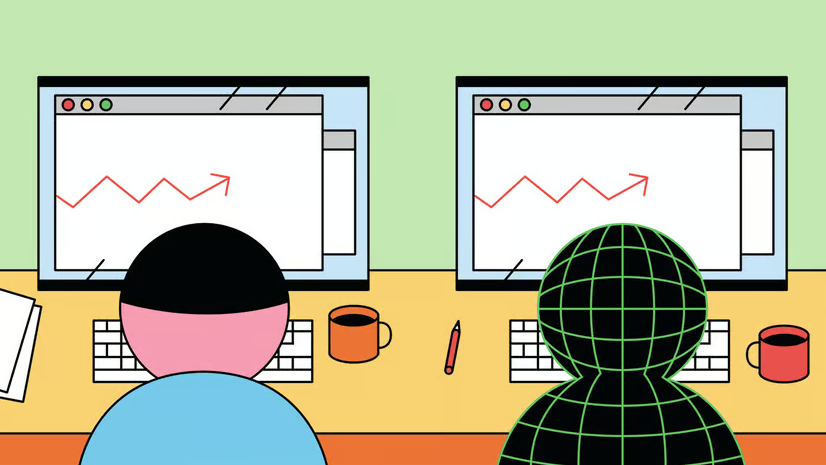
It deals with the economic approach to the arrival of Artificial Intelligence🤖 and the apparently exaggerated expectations of its impact on employment.
There are many economic issues, but I will focus on the technological edge.
First, the growth📈 since November has been more than staggering; today there are AIs capable of “making” music, programs that convert text to video, and soon it will be possible through OpenAI bots to order food or book customized vacations like those who use a web search engine.
Second, this technological frenzy has not yet had the impact on the economy that some believe; according to The Economist, the time horizon will be at least 30 to 50 years⏩. The important thing here is to make this growth inclusive.
Third, the technology company that has benefited the most so far, surprisingly, is not an AI company, but the company Nvidia, which is a company that drives AI models (chips for AI), data center revenues are skyrocketing.
Of course, when it comes to jobs, the curious thing is that countries with high rates of automation and robotics, such as Japan, Singapore, and South Korea, have the lowest unemployment rates, and while it seems early to see the impact of AI on jobs, in the United States it could reach a net loss of 15%📊, similar to what it will reach in 2020, at the height of the pandemic🦠.
On the other hand, the AI economy is likely to create new jobs. If you want to know which jobs are most at risk, I invite you to read the full article. ( https://www.economist.com/finance-and-economics/2023/05/07/your-job-is-probably-safe-from-artificial-intelligence?utm_medium=social-media.content.np&utm_source=linkedin&utm_campaign=editorial-social&utm_content=discovery.content)